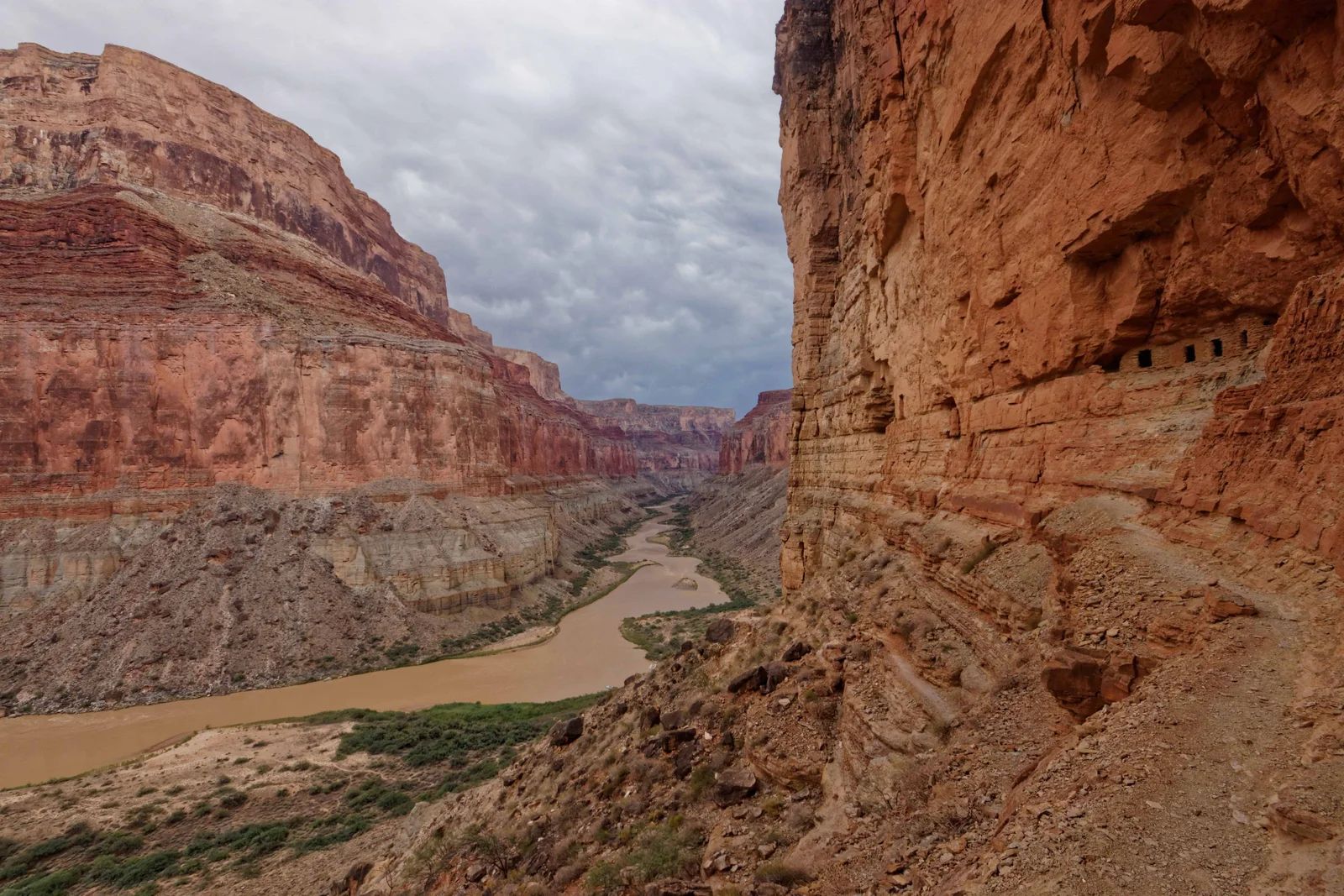
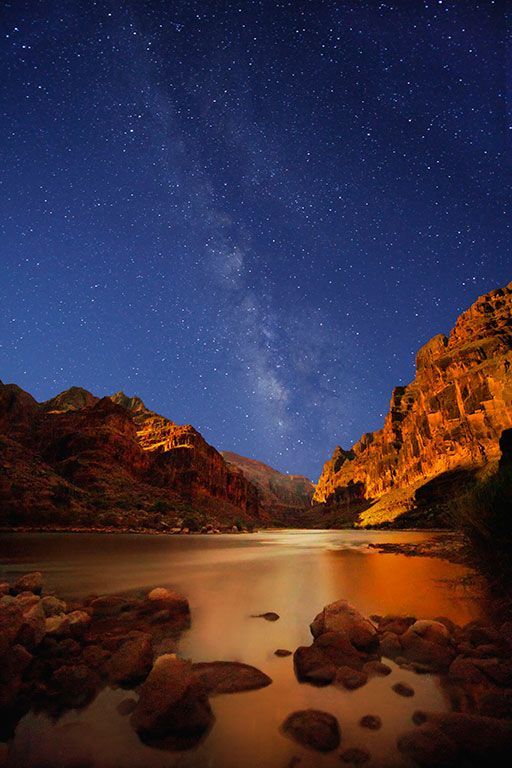
The Grand Canyon is massive. It was formed over millions of years by geologic processes including deposition, uplift, downcutting, and erosion. Today the Grand Canyon covers 1902 square miles in area. The state of Rhode Island is only 1212 square miles in size.
The Colorado River flows 277 miles through Grand Canyon from Lees Ferry to the Grand Wash cliffs. John Wesley Powell took the first river trip through the Grand Canyon in 1869. Today over 20,000 people travel by boat through the Grand Canyon each year. In comparison, approximately 6,000,000 people visit the Grand Canyon each year.
The Grand Canyon is over a mile deep. A mile high is 5280 feet which is about 145 of our Grand Canyon motorized rafts stacked end to end or 293 of our oar boats put end to end. As the Condor flies it is 10 miles across from the North Rim Village to the South Rim Village. It is a 21 mile hike across the canyon via the North Kaibab and South Kaibab trail system or 23.5 miles via the North Kaibab and Bright Angel Trail.
To fill the Grand Canyon it would take 1,100,758,441,558,442 gallons of water which is 5.45 trillion cubic yards. This is approximately the same volume as Haley’s Comet and 1,500,000 times bigger than the Great Pyramid of Giza.